
Hey there,
Let me be honest with you. For a long time, I thought vision boards were a little too aesthetic and not enough real. You know the kind — perfectly curated collages of dream houses and tropical vacations pinned to a corkboard, looking more like a magazine mood board than something with actual intention behind it.
But then I hit a wall. Motherhood, exhaustion, and the quiet sense that I had slowly lost touch with who I was outside of being “Mom.” I wasn’t in a bad place, exactly — I just needed to find my way back to myself. And that’s when I started exploring the idea of a healing vision board. Not a wish list. Not a dream board. A healing board.
This isn’t about manifesting a new car or a bigger house. It’s about reconnecting with what your soul actually needs right now — rest, peace, strength, joy, faith. It’s about making something with your hands (or your phone) that reminds you, every single morning, of who you are and where you’re headed.
Whether you’re a tired mom, someone walking through grief, burnout, or just a season of feeling a little lost — this post is for you. Let’s make something that helps.
This site contains affiliate links. I may earn a small commission, at no extra cost to you. I’d appreciate it if you can support me.
Why a Healing Vision Board Is Different
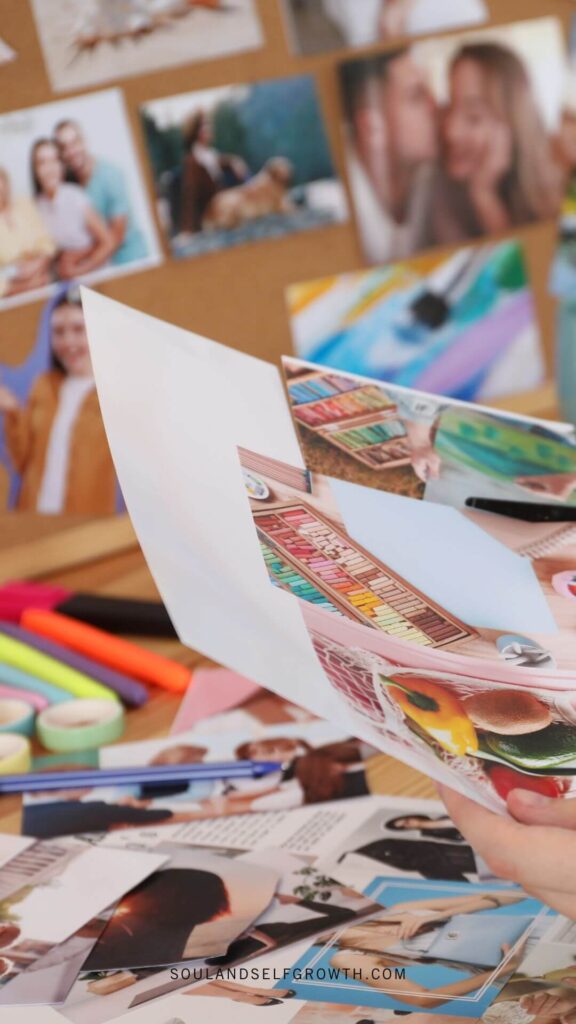
A regular vision board is typically about the future — what you want to achieve or have. A healing vision board shifts the focus inward. It’s about where you are right now, and what you need to grow, rest, and recover.
Here’s why it works:
- Your brain responds to images. There’s solid science behind visualization — when you repeatedly expose your mind to images and words that represent your intentions, your brain starts to shift how it processes your daily experience. It’s called neuroplasticity, and it’s not just a buzzword. What you look at shapes what you notice, seek out, and believe is possible.
- The process itself is healing. Sitting down to thoughtfully choose images and words — even for thirty minutes — is a form of creative meditation. It forces you to slow down, get quiet, and ask yourself what you actually need. That pause alone can be transformative.
- It works as a daily reminder. Life moves fast. A healing vision board placed somewhere you see it every morning gently brings you back to your intentions before the noise of the day takes over.
- It makes hope visible. When you’re tired or discouraged, something as simple as a handwritten verse on a piece of card can anchor you. It’s hard to feel hopeless when you’re looking at words that remind you of what’s true.
For those of us who are people of faith, there’s another layer here. A healing vision board isn’t magic, and it isn’t about controlling outcomes. It’s a tool of intentional trust — a way of saying to God, “This is where I am, and this is what I’m leaning into.” Prayer and vision can sit side by side beautifully.
Step 1: Before You Touch Anything — Get Quiet
This is the step most people skip, and it’s the most important one.
Before you open Pinterest or reach for a pair of scissors, spend a few minutes in stillness. Pray, journal, or sit with these questions:
- What area of my life needs the most healing right now? (Your body? Your emotions? A relationship? Your sense of identity or purpose?)
- What do I want to let go of this season?
- What do I want to invite in?
Write down 3 to 5 words or short phrases that come to you. They don’t have to be elegant. Mine looked like: “rest,” “I’m enough,” “present,” “trust the process.” Simple and real is better than beautiful and hollow.
If you’re a believer, this is a great moment to ask, “Lord, what do You want me to focus on right now?” Then actually wait and listen. Sometimes the words that come are surprisingly tender.
Also, choose one to three Bible verses or meaningful quotes to anchor your board. These will become the backbone of everything else. A few that have meant a lot to me in hard seasons:
- “but those who wait for Yahweh shall renew their strength” — Isaiah 40:31
- “Be still and know that I am God.” — Psalm 46:10
- “I can do all things through Christ, who strengthens me.” — Philippians 4:13
You don’t have to use Scripture — any words that genuinely move you work. The key is that they feel true, not just pretty.
Step 2: Choose Your Format — Digital or Handmade?
Good news: there is no wrong answer here. Both have real value. Here’s how to think about it:
Digital (free apps)
If you’re short on time or don’t have craft supplies on hand, go digital. These free tools are genuinely great:
- Canva (canva.com) — This is the easiest starting point. Search “moodboard” or “vision board” in their templates, or start from a blank canvas. You can drag in images, add text, change colors, and download your finished board as a high-quality print or phone wallpaper. 100% free on the basic plan.
- Pinterest — Create a secret board and pin images that resonate with your theme words. It’s less polished than Canva, but incredibly intuitive and a wonderful source of visual inspiration.
- Vision Board & Goal Tracker app (iOS) — A dedicated app built specifically for this purpose. Simple to use and designed for daily viewing.
- PureRef — More of a desktop collage tool, great if you want to gather reference images before building in Canva.

Digital boards are also easy to set as your phone wallpaper or screensaver, which means you see them multiple times a day without even trying.
Handmade (craft supplies)
There is something deeply satisfying about making something with your hands. If you have an afternoon and want the full experience, here’s what you need:
- A3 white cardstock or watercolor paper as your base (heavier paper holds glue better and looks more intentional)
- Old magazines — lifestyle, nature, home décor, or faith-based publications are perfect for cutting images and text
- Printed photos from your phone (Kodak Moments, or even a home printer works fine)
- A glue stick or Mod Podge, if you want it to last longer
- Washi tape for borders and texture
- Gold or silver fine-tip markers for writing words and verses
- Watercolor paints for soft background washes of color
- Stencils or stamps, if you want a bit of decoration without needing artistic skill
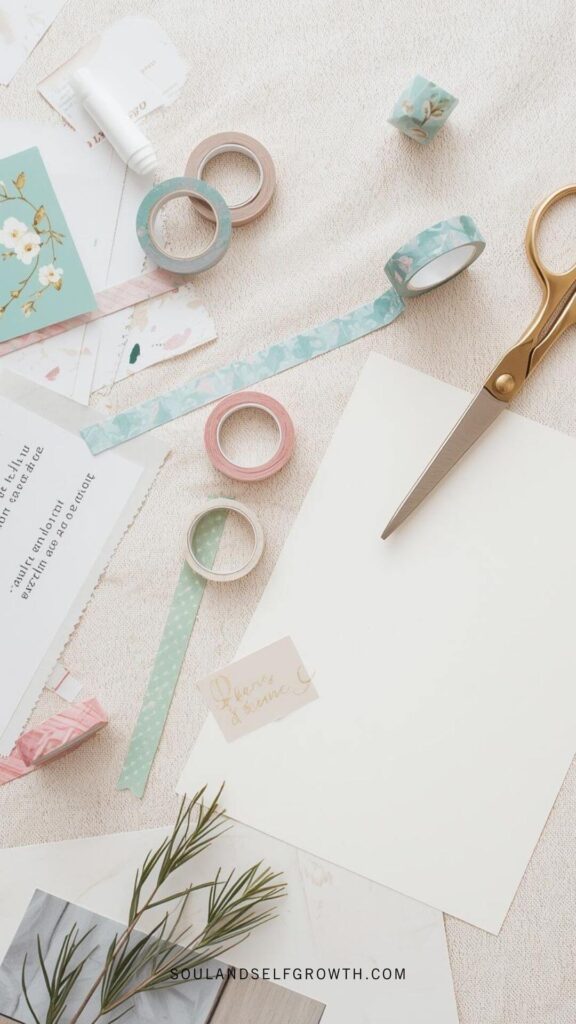
You don’t need all of this. Even just cardstock, a glue stick, printed images, and a marker are more than enough. The point is the intention, not the perfection.
The hybrid option
Design it in Canva, print it at home or at a copy shop, then add handwritten words, washi tape, or pressed flowers on top. Best of both worlds.
Step 3: Gather Your Images and Words
Now the fun part — but with one important rule: choose things that resonate, not things that impress.
It can be tempting to fill your board with glossy, aspirational images that look good together. Resist that. Every image and word on a healing vision board should mean something specific to you — something that actually stirs your heart when you look at it.
Here are some theme areas to consider gathering images around:
- Nature and stillness — forests, water, open skies, morning light
- Body and rest — images that represent sleep, slow movement, nourishment, warmth
- Connection — family, friendship, community, belonging
- Faith and hope — crosses, Scripture, light coming through windows, praying hands
- Identity and purpose — words like “worthy,” “called,” “enough,” “brave.”
- Joy and color — anything that simply makes you feel lighter when you see it
Where to find free images:
- Unsplash.com — Thousands of beautiful, free, high-resolution photos. Search your theme words and download whatever moves you.
- Pinterest — Search your keywords and save to a board before pulling into Canva.
- Your own camera roll — Don’t overlook this. A photo of your child laughing, a sunrise from your window, a hand holding a mug of tea — these are personal and powerful.
For words and quotes, write them by hand if you can — even if your handwriting is imperfect. There is something about seeing your own handwriting that makes words feel more owned, more real.

Step 4: Put It All Together
A few practical tips for the assembly process, whether you’re working digitally or by hand:
Layout tips
- Put your most important word, verse, or image at the center. Everything else radiates out from there.
- If working by hand, lay everything out on the surface before gluing anything. Move things around until the arrangement feels right.
- Leave some breathing room. White space is peaceful. You don’t need to fill every inch.
- Group by theme or feeling rather than trying to make it perfectly symmetrical.
In Canva
- Start with a square or A4 canvas — both print and display well.
- Use a soft, neutral background color (warm white, blush, sage) rather than stark white.
- Use 2 to 3 fonts maximum — one for headings, one for body text. Canva has beautiful free options like Playfair Display and Lato.
- Download as a high-quality PDF or PNG for printing, or as a JPG for your phone wallpaper.
The personal touch
Whether digital or handmade — add at least one thing in your own handwriting. A single sentence, a word, a date. It transforms the board from something you made into something that is yours.
A Word for the Faith-Filled Mama
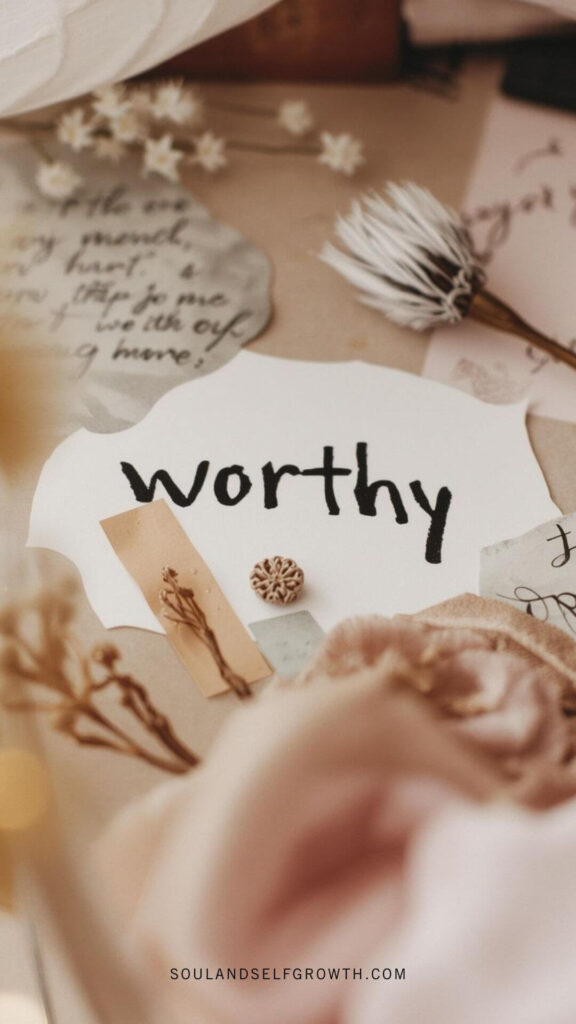
I want to address this directly, because I know some of us have hesitations. Is a vision board too “new age”? Am I trying to control my future by making one?
Here’s how I think about it: a healing vision board is not a vision board in the prosperity-gospel sense. It’s not about claiming things from the universe or willing your dreams into reality. It’s a visual prayer journal, a way of saying: this is what I’m bringing to God right now. This is where I’m trusting Him. This is what I’m asking for help with.
The act of making it is itself a spiritual practice — slowing down, getting honest, asking for guidance. And looking at it each morning is a way of beginning the day in alignment with what you believe and what you’re trusting God with.
Some ideas specific to a faith-centered board:
- Include a verse that speaks to your specific struggle or season — not a generic “feel good” verse, but one that actually hits the tender spot.
- Add a short prayer written in your own hand.
- Include an image that represents surrender, not just achievement — open hands, still water, a single candle flame.
- Involve your children if they’re old enough — making mini boards together can open up beautiful conversations about faith, feelings, and hope.
This board is not your plan. It’s a window into your prayer.
How to Actually Use It (So It Doesn’t Become Just Décor)
The most beautiful vision board in the world does nothing if you put it in a drawer. Here’s how to let it do its work:
Place it where you’ll see it
Bathroom mirror, beside your bed, above your desk, as your phone lock screen — wherever your eyes go first in the morning. This is non-negotiable. Out of sight, really is out of mind.
Build a two-minute morning ritual
You don’t need a long quiet time for this (because let’s be real — toddlers don’t respect quiet time). Two minutes is enough. Stand or sit in front of your board. Read your verse or anchor word out loud. Take one slow breath. That’s it. Tiny and consistent beats long and occasional, every time.
Update it as you grow
Healing isn’t a destination — it’s a direction. Every six months or so, revisit your board. Does it still feel true? Are there things you’ve moved through that no longer need to be there? Are there new areas of your heart that need attention?
A healing vision board is a living document. Let it change with you.
Share it — or keep it private
Some boards are meant to be shared. Others are deeply personal and meant only for you. Both are completely valid. If you do feel moved to share, it can be a powerful invitation for others to do the same.
And if you want to go even deeper on the faith side — I’ve got you. Check out my full guide on Christian Vision Board: A Complete Guide to Faith-Filled Goal Setting
Are you looking for more lifestyle tips? Feel free to explore my Pinterest page as well!
You Don’t Have to Have It All Together to Start
Here’s what I want you to take away from all of this: you don’t need a perfectly organized craft space, or an hour of free time, or a clear vision of what your healed life looks like. You just need to start with what’s true right now.
What do you need more of? What feels too heavy to carry right now? And even on the hardest days, is there still a tiny flicker of hope alive in you?
Start there. Put it on a piece of paper. Add a picture that feels like breath. Write a word that feels like grace. And then look at it tomorrow morning, and the morning after that.
That’s the whole thing. It really is that simple — and that powerful.
If you make one, I would genuinely love to hear about it. Drop a comment below and tell me what word is at the center of yours. We’re in this together.
The Bible verses in this post are quoted from the World English Bible (WEB), which is in the public domain.
0 Comments